



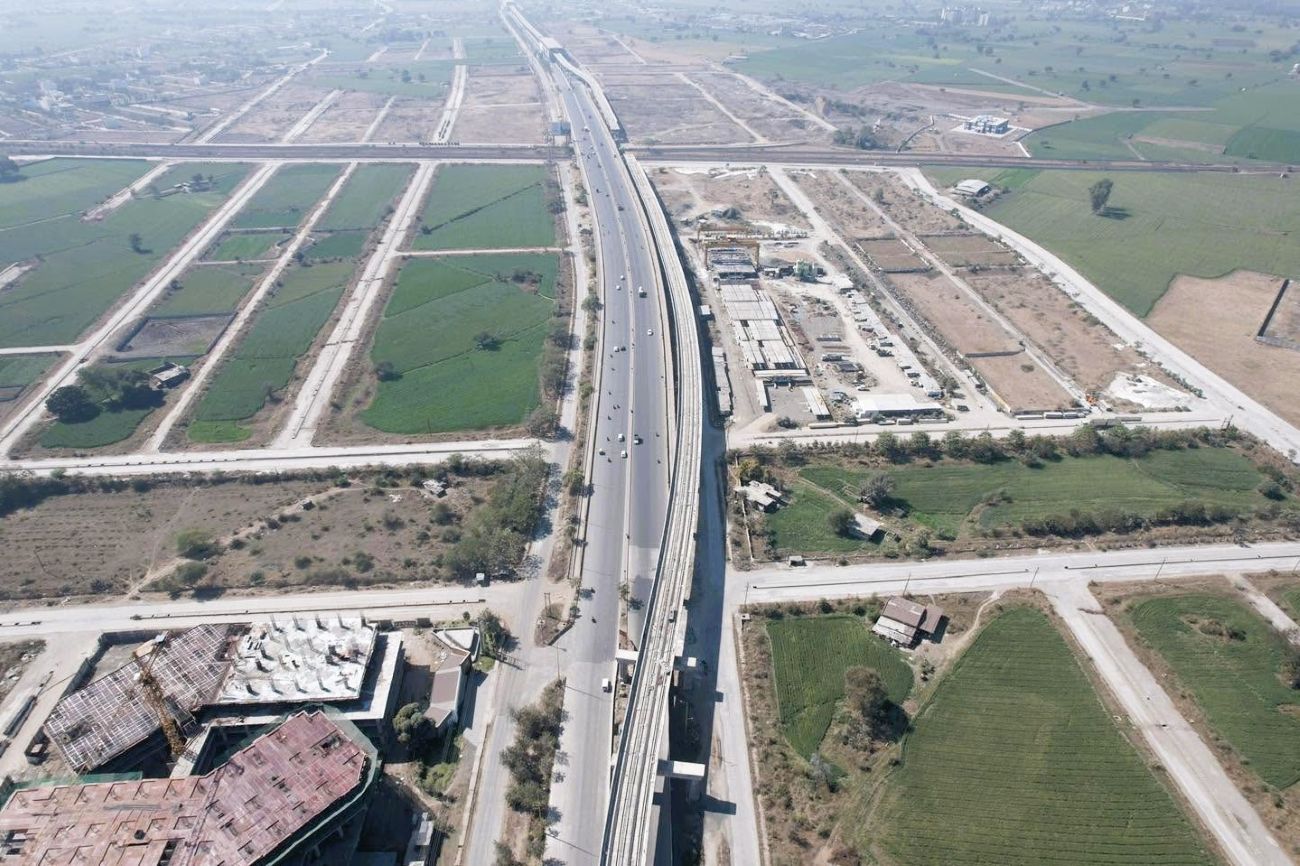
Quick Take: For more than a decade, Indore’s Super Corridor has been projected as one of the city’s biggest future growth destinations. Wide roads, airport connectivity, Metro infrastructure, IT campuses and large-scale planning have all strengthened its potential.
Yet, despite this development, Super Corridor is still waiting to become the kind of self-sustaining real estate and commercial ecosystem that Vijay Nagar has evolved into.
The bigger question is: What is still missing?
Super Corridor Was Planned as More Than a Residential Zone
The original vision for Super Corridor was never limited to housing. The corridor was conceived as a mixed-use growth destination, combining IT and knowledge-based activities, commercial development, institutional uses, residential projects and employment generation.
The intended development cycle was straightforward:
Jobs → Businesses → People → Housing Demand → Commercial Activity
But real estate development often moved in the opposite direction.
Land appreciation → Plotting → Residential Projects → Waiting for Demand
That difference may explain much of the corridor’s current situation.
The Missing Link: A Strong Employment Ecosystem
Infrastructure has certainly improved Super Corridor’s connectivity and visibility. However, a property hotspot is not created by roads and projects alone. For sustained end-user demand, the area needs a much larger ecosystem of:
- IT and corporate offices
- GCCs and startups
- Financial and professional services
- Retail and commercial establishments
- Schools and educational institutions
- Healthcare facilities
- Hotels, restaurants and entertainment
- Thousands of daily employment opportunities
The presence of major IT companies has given the corridor credibility. But the larger question is whether that employment ecosystem has expanded sufficiently to create continuous daily movement and residential demand.
Metro Is an Enabler Not the Entire Solution
Metro connectivity can significantly improve the attractiveness of a location, but Metro alone cannot create a property hotspot. For Metro to transform real estate demand, there must be enough people travelling to and from the corridor every day.
That requires Employment + Population + Commercial Activity + Daily Mobility
Without these supporting elements, infrastructure can improve connectivity without immediately creating the urban intensity seen in established commercial districts.
Investment Destination vs Liveable Destination
This is where the difference between investor demand and end-user demand becomes important.
Investors may look at:
- Future infrastructure
- Land appreciation
- Upcoming projects
- Connectivity
- Long-term development potential
But an end user asks very different questions:
Where will I work?
Where will my children study?
Where is the nearest hospital?
Where will I shop?
How long will my daily commute be?
Is public transport convenient?
A location can therefore become an investment destination before it becomes a truly liveable urban destination.
Super Corridor is still navigating that transition.
The “Next Vijay Nagar” Narrative Needs More Than Property Marketing
Over the years, Super Corridor has frequently been positioned as the “Next Vijay Nagar”, “Next IT Hub” or “Future Property Hotspot.”
But a real comparison with Vijay Nagar requires more than land availability and infrastructure.
Vijay Nagar evolved through a combination of employment, commerce, retail, hospitality, education, residential development and daily population movement.
For Super Corridor to reach a similar level, its economic ecosystem will have to grow alongside its real estate.
The Growth Story Is Far From Over
Despite these challenges, writing off Super Corridor would be premature.
The corridor already has several significant advantages Metro connectivity, wide roads, proximity to the airport, IT development and long-term government planning. Recent planning around projects such as Startup Park, with proposed corporate, IT, retail and hospitality components, could add another layer of economic activity.
The proposed Indore-Pithampur Economic Corridor could also strengthen connectivity between Super Corridor and the wider industrial and economic network, potentially supporting mixed-use, commercial, residential and employment-led development.
The potential is clearly there.
The real question is how quickly that potential translates into actual economic activity.
What Will Finally Make Super Corridor a Property Hotspot?
The next phase of Super Corridor’s growth may depend less on how many projects are announced and more on how many people actually work, live, shop and spend their daily lives there.
The critical indicators to watch are:
More jobs. More companies. More daily commuters. More residents. More schools and hospitals. More retail and commercial activity.
That is when infrastructure begins converting into a complete urban ecosystem.
Indore Talk Realty Take
Super Corridor is neither a failure nor a finished success story. It is a long-term growth corridor whose infrastructure has progressed faster than its economic ecosystem. For the corridor to become a genuine property hotspot, the narrative must move beyond property marketing to economic development.
Because ultimately, real estate value is not created simply by the road that reaches a location.
It is created by the economic activity that makes people travel on that road every day.
🎥 Watch Full Episode
Why has Super Corridor still not become Indore’s property hotspot despite years of promotion and development?
Watch the full Indore Talk Realty Newsroom episode for a deeper look at the corridor’s development, employment ecosystem, infrastructure, Metro connectivity and its potential role in Indore’s next phase of growth.
▶️ Watch the full episode embedded above.
Super Corridor’s promise is still alive. The real test is whether it can evolve from an investment destination into a self-sustaining urban centre.