



Quick Take
Indore’s real estate market is no longer a single market. As the city expands, multiple micro markets are emerging, each driven by different combinations of connectivity, employment, infrastructure, commercial activity and end-user demand.
Vijay Nagar, Bypass, MR-11, Talawali Chanda, Super Corridor, Indore–Ujjain Road, Khandwa Road and Rau are increasingly developing their own real estate identities.
But there is an important distinction Future Potential is not the same as Current Demand. Understanding that difference is becoming increasingly important for both investors and homebuyers.
Vijay Nagar: An Established Urban Market
Vijay Nagar’s strength is not simply the number of residential projects. It has developed a broader urban ecosystem comprising commercial activity, corporate offices, retail, hospitality, education and housing. That creates multiple sources of property demand.
Unlike an emerging corridor that depends heavily on future development, an established market already has people, businesses and services generating daily activity. Its biggest advantage is the ecosystem that already exists.
Talawali Chanda & MR-11: Emerging Growth Pockets
Talawali Chanda and MR-11 represent a different stage of development.
Their growth story is linked to:
- New residential development
- Improving connectivity
- Expanding city limits
- Future infrastructure
- Increasing commercial activity
But investors need to look beyond announcements and proposed infrastructure. The important question is Is end-user demand growing at the same pace as development?
Because new buildings alone do not create a sustainable real estate market.
Bypass: One Corridor, Multiple Micro Markets
Indore Bypass can no longer be viewed simply as the city’s outer edge. Residential projects, plotted developments and commercial activity have created multiple pockets along the corridor. But treating the entire Bypass as one market can be misleading.
Property value can change significantly depending on Main-road connectivity → Approach road → Surrounding development → Existing activity → Future infrastructure
Two properties on the same broad corridor can therefore have very different demand and liquidity profiles.
Super Corridor: The Future-Potential Story
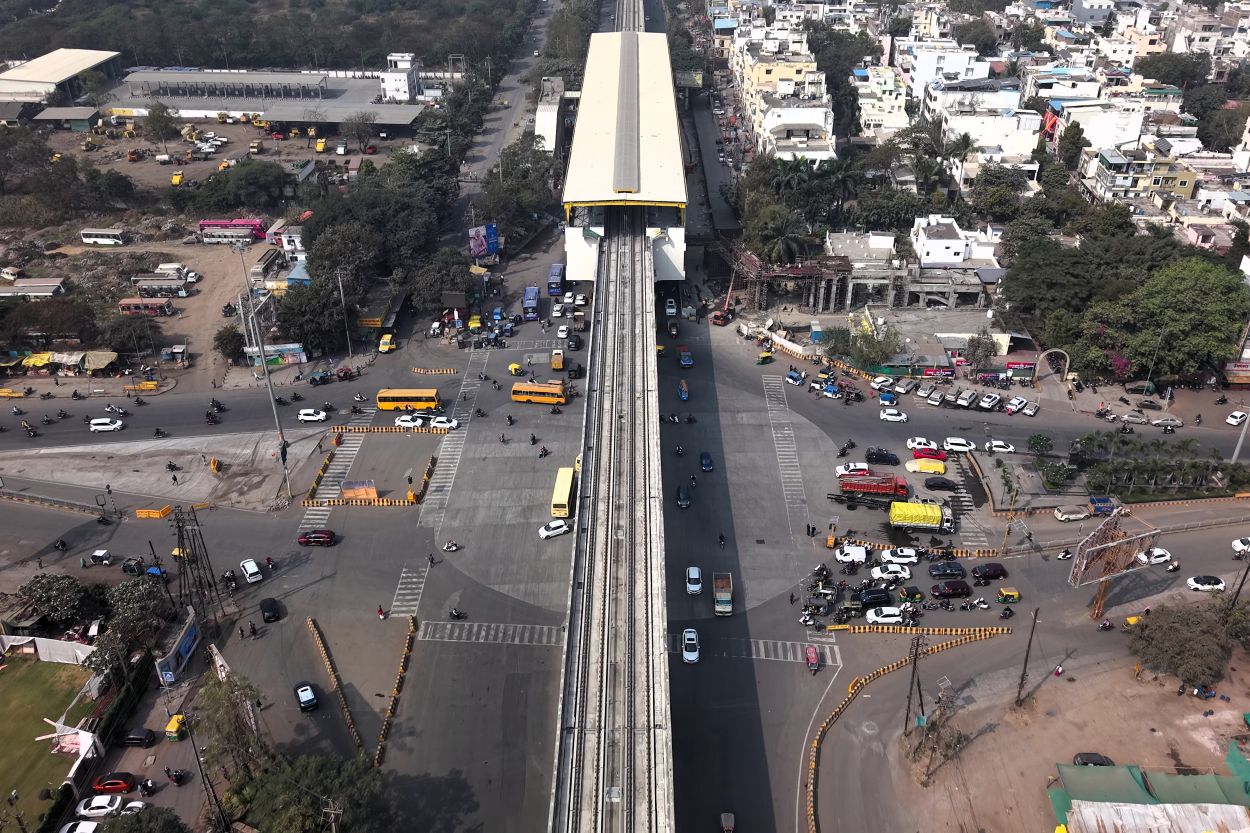
Super Corridor remains one of Indore’s most talked-about growth corridors. IT development, institutional projects, Metro connectivity and planned infrastructure have created a strong long-term growth narrative.
But one question remains particularly important Is employment and actual occupancy growing alongside infrastructure?
For a real estate market to become self-sustaining, infrastructure needs to translate into jobs, population, businesses and daily activity.
Future potential matters. But long-term residential demand ultimately needs people who actually want to live and work there.
Indore–Ujjain Road: A New Growth Identity
Indore–Ujjain Road is developing its own real estate story.
Its growth is being influenced by:
- Connectivity towards Ujjain
- Airport access
- Infrastructure development
- Residential expansion
- Emerging commercial activity
- Increasing developer interest
But here too, investors need to separate development potential from current liveability. A corridor can have strong long-term prospects while still being in an early stage of urban development.
The important question is whether end users and economic activity eventually follow the land and projects.
Khandwa Road & Rau: Different Demand Drivers
Khandwa Road and Rau cannot simply be grouped together as “Outer Indore.”
Their underlying demand drivers are different. Khandwa Road is increasingly connected with education, healthcare, residential expansion and connectivity. Rau, meanwhile, benefits from its relationship with Pithampur, industrial activity and the expansion of western Indore.
Understanding these individual demand drivers is more useful than looking at both areas simply through their distance from the city centre.
The Risk of the “Story”
Every emerging micro market eventually develops its own narrative.
One location may be promoted around Metro, Another around IT, Another around Airport, Another around Industrial connectivity, Another around Ujjain Road.
These narratives can help identify genuine growth opportunities. But sometimes the story becomes bigger than the actual demand. That’s where investors need to be careful.
Infrastructure Potential ≠ Actual Market Demand
The real indicators are occupancy, employment, rental demand, commercial activity, connectivity and the ability of people to actually use and live in the location.
What Should Homebuyers Ask?
For an end user, the question shouldn’t simply be “Which area has the best property?”
The better question is “Which micro market fits my life?”
Consider:
- Where is your workplace?
- What does your family need?
- How far are schools and healthcare?
- Is public transport practical?
- What will your daily commute look like?
- Are essential services already available?
- Can you comfortably live there for the next 10–15 years?
There is no universal “best location.”
There is only the location that best fits a particular buyer’s needs.
Indore Talk Realty Take
Indore’s future real estate market may not be one single market at all. It could become a network of interconnected micro markets, each with its own economics, demand drivers and development cycle.
Vijay Nagar will have its established urban ecosystem.
Bypass will continue to evolve through multiple pockets.
Super Corridor will depend heavily on employment and economic activity.
Indore–Ujjain Road will develop around connectivity and expanding urbanisation.
Rau will remain linked to the industrial and western growth story.
MR-11, Talawali Chanda and Khandwa Road will continue developing their own identities.
That means the headline “Indore Property Rates” will become less useful on its own.
The more important question will be Which micro market is attracting the right people, businesses and end users and why?
Indore isn’t just expanding anymore. It is evolving into a network of micro markets and understanding that shift will be critical to understanding its real estate future.